


How to Choose a Custom Acrylic Aquarium Manufacturer for Public Aquarium Projects


Choosing a custom acrylic aquarium manufacturer is not only a purchasing decision. For a public aquarium, science center, resort attraction, or commercial marine exhibit, the manufacturer affects visual impact, structural safety, project schedule, installation coordination, and long-term operation.
Editorial note: This guide is written for developers, architects, aquarium investors, museum planners, and procurement teams evaluating acrylic aquarium engineering partners. Final structural dimensions, acrylic thickness, waterproofing details, and life support system design should always be confirmed by qualified project engineers.
Why the Manufacturer Matters More in Large Aquarium Projects
Small decorative tanks can often be evaluated by price, size, and delivery time. Large acrylic aquarium projects are different because the viewing structure becomes part of the building experience. A panel, tunnel, cylinder, or dome must match the spatial design, visitor route, water pressure conditions, transportation plan, and installation sequence.
A capable manufacturer should understand both acrylic fabrication and aquarium project delivery. This includes early feasibility review, acrylic structural design, factory production, logistics, on-site installation, water testing, and commissioning. When these steps are separated between too many parties, the project can face design gaps, material delays, installation conflicts, or unclear responsibility.
Start With the Project Type, Not Only the Tank Size
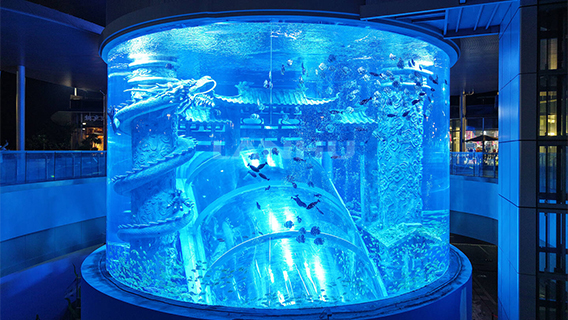
The first question is not simply “how large can the aquarium be?” A public aquarium, airport cylindrical tank, underwater restaurant wall, hotel atrium aquarium, and private mansion display all need different design logic.
Public aquariums usually require high visitor capacity, wide viewing angles, themed storytelling, and stable operation for daily traffic.
Commercial aquariums must balance visual attraction, brand value, maintenance access, and business opening schedules.
Private aquariums place more emphasis on interior integration, noise control, equipment concealment, and premium finishing.
Museums and science centers need educational clarity, safe circulation, and exhibits that support interpretation rather than only decoration.
Before confirming drawings, buyers should review whether the supplier has handled similar project types. Lanhu’s project section includes public aquariums, commercial aquariums, private aquariums, acrylic pools, and museum/science center projects, which gives buyers useful reference points when evaluating the right solution category.
Check Whether Acrylic Production and Engineering Are Connected
One common risk in aquarium construction is treating the acrylic panel as an isolated material order. In reality, acrylic quality, bonding, forming, machining, polishing, packaging, lifting, and installation must support the same engineering target.
For large projects, the supplier should be able to explain how the material is produced, how the edges are processed, how curved structures are formed, how stress is controlled, and how the finished acrylic will be protected during transportation. The production process is not a background detail; it directly affects optical clarity, joint quality, and installation reliability.
Buyers can review Lanhu’s acrylic manufacturing and quality assurance information to understand its acrylic production base, acrylic process flow, thick acrylic sheet capability, curved acrylic structures, and quality control process.
Evaluate Engineering Support Before Comparing Quotations
A quotation is only useful when the design basis is clear. If a supplier quotes only by panel length, width, and thickness, important project details may be missing. For large aquariums, the engineering discussion should include water depth, viewing area, support structure, waterproofing interface, allowable tolerances, site access, lifting conditions, and maintenance zones.
A stronger supplier should be able to support early planning questions such as:
Is the concept feasible for the building structure and available site access?
Should the viewing surface be flat, curved, cylindrical, or tunnel-shaped?
How will the acrylic connect with concrete, steel, waterproofing, and interior finishes?
Where will the life support system and maintenance access be located?
Can the panel size be manufactured, transported, and installed safely?
These questions are especially important for international projects because fabrication, export packaging, shipping, customs, and on-site lifting must be coordinated early.
Look for Integrated Project Delivery Ability
Many aquarium buyers begin with a visual idea: a giant viewing window, a walk-through tunnel, a cylindrical tank, or an underwater dining feature. The challenge is turning that idea into a stable, buildable system. A custom acrylic aquarium manufacturer with integrated delivery ability can reduce project friction because the design, acrylic structure, aquatic habitat, and installation method are considered together.
Lanhu positions its service system around feasibility, design, global procurement and logistics, construction and system installation, commissioning, and operation. For buyers who need one accountable project path, its custom acrylic aquarium manufacturer page is a useful starting point for understanding the full service scope.
Questions to Ask Before Selecting a Supplier
Before signing a contract, buyers should request more than a product catalog. The supplier should be able to provide project examples, process explanations, engineering review points, and clear responsibility boundaries.
Which similar public aquarium or commercial aquarium projects has the company completed?
Can the supplier provide acrylic production, structural coordination, installation, and commissioning support?
How are acrylic panels protected during machining, polishing, packaging, and shipping?
What information is required before the final quotation can be confirmed?
Who coordinates with architects, structural engineers, waterproofing contractors, and life support system teams?
Recommended Buying Path for Public Aquarium Developers
A practical buying process should move from concept to evidence. First, define the project type, visitor experience, water volume, and architectural constraints. Second, shortlist suppliers that can show relevant projects and manufacturing capability. Third, discuss feasibility and engineering scope before locking the budget. Finally, review installation, commissioning, and operation support as part of the supplier decision.
For project teams preparing an aquarium concept or tender package, Lanhu’s aquarium engineering project portfolio can help compare possible formats such as public aquariums, commercial aquariums, private aquariums, museum exhibits, cylindrical tanks, and acrylic pool structures.
Conclusion
The right custom acrylic aquarium manufacturer should offer more than acrylic panels. For public aquarium and commercial attraction projects, buyers should look for a partner that understands acrylic fabrication, structural coordination, visitor experience, aquatic life support, logistics, installation, and commissioning. This is the difference between buying a material and building a reliable aquatic attraction.
FAQs
What is a custom acrylic aquarium manufacturer?
A custom acrylic aquarium manufacturer designs and produces acrylic aquarium structures such as viewing panels, tunnels, cylinders, domes, and integrated tanks according to project requirements.
Why is acrylic used for large aquariums?
Acrylic is widely used because it offers high optical clarity, design flexibility, and strong performance for large viewing structures when engineered correctly.
What should buyers prepare before requesting a quotation?
Buyers should prepare the project type, tank concept, approximate dimensions, water depth, site location, installation conditions, target opening schedule, and expected service scope.
Should I choose a product supplier or an engineering partner?
For small tanks, a product supplier may be enough. For public aquariums, oceanariums, museums, hotels, and commercial attractions, an engineering partner is usually safer because the acrylic structure must coordinate with architecture, waterproofing, life support systems, and installation.
References

More news
-

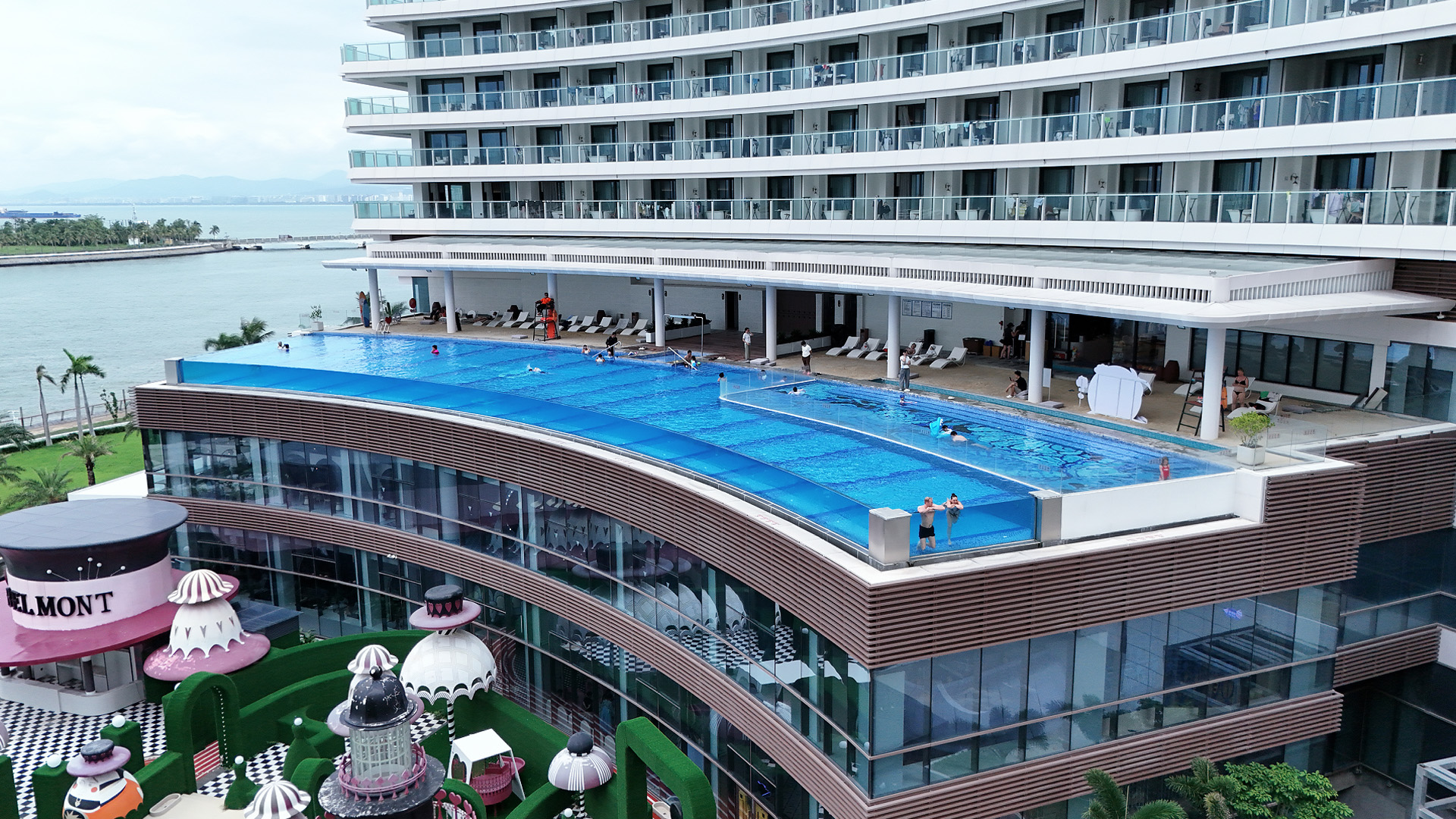 2026-08-14After 3 Years Under Strong UV Exposure: How Lanhu Acrylic Maintains Transparency in a Luxury Acrylic Pool Project in Sanya, ChinaLearn more

-
 2026-08-12From Import Dependence to Engineering Confidence: The Rise of China’s Large-Scale Aquarium Acrylic Industry(二)Learn more
-
 2026-08-12From Import Dependence to Engineering Confidence: The Rise of China’s Large-Scale Aquarium Acrylic Industry(一)Learn more